Prevention
The weak spot on every Duramax, Power Stroke and Cummins
Every diesel generation has a part that tends to go first. Here's the one to watch on each engine, and how to get ahead of it.
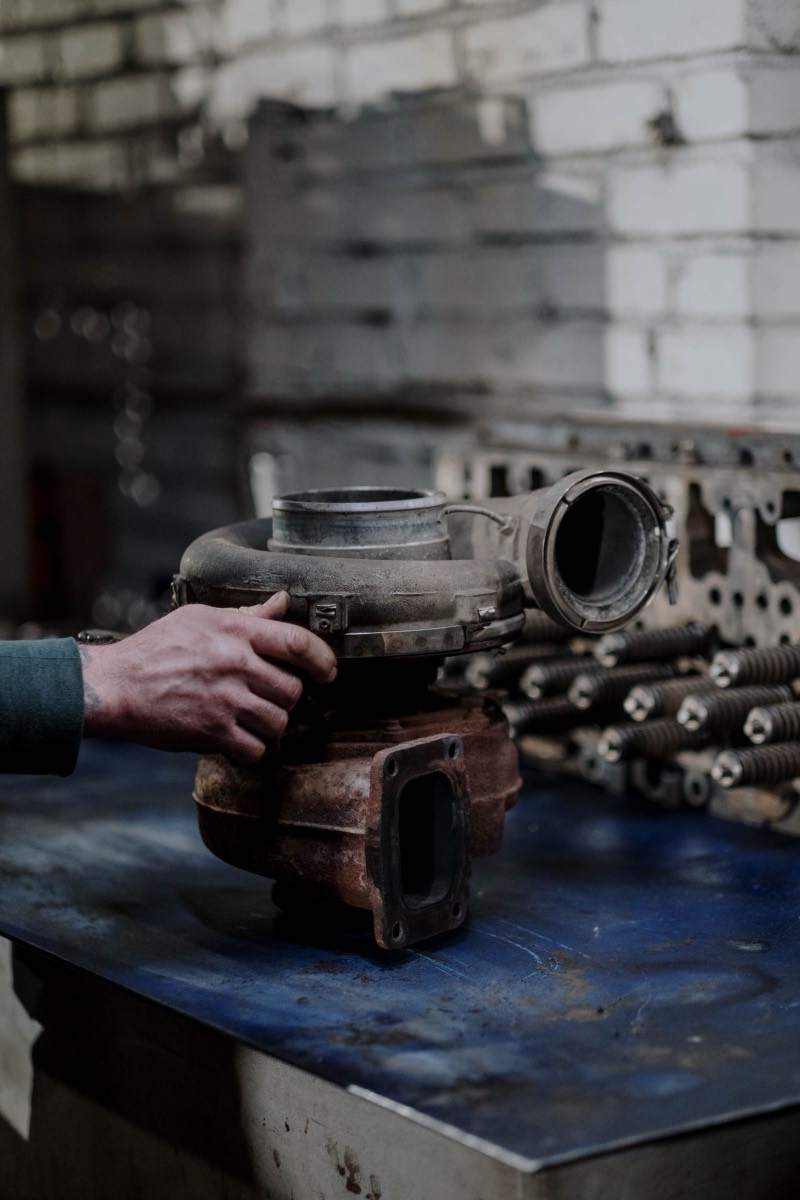
Every diesel engine family has a part that tends to fail first. Some are cheap to fix early and expensive to fix late, and a few take other parts down with them when they go.
This is the list we'd want in hand before buying one of these trucks, hooking up a heavy trailer or putting big miles on it. It runs engine by engine, oldest first.
Cummins
5.9L 12-valve (1989–1998): the killer dowel pin
A small dowel pin in the timing gear housing can work loose and drop into the gears. A tab kit locks it in place. If you only do one thing to a 12-valve, do this one. It's a small job next to what a loose pin can do.
5.9L 24-valve (1998.5–2002): the VP44 and the lift pump behind it
The VP44 injection pump has a reputation, and a weak lift pump is the most common reason it fails. Put a new VP44 on a weak fuel supply and it can fail the same way. Test the lift pump before you buy the injection pump.
5.9L common rail (2003–2007): dirty fuel
These injectors don't tolerate dirty fuel, and a failed lift pump can take out the injectors and the CP3 pump with it. Filters on schedule and a healthy lift pump are cheap protection.
6.7L (2007.5–today): turbo vanes, manifolds and the 2019–2020 pump
Sticking turbo vanes and cracked exhaust manifolds are the common complaints. The 2019 and 2020 trucks also use the Bosch CP4 high-pressure fuel pump, which gets its own section below.
Power Stroke
7.3L (1999–2003): the cam position sensor
When it quits, the truck can die on the road and refuse to restart. It's an inexpensive sensor, and a spare in the glove box is standard 7.3 advice.
6.0L (2003–2007): the oil cooler
Most 6.0 trouble starts at the oil cooler. A plugged cooler starves the EGR cooler, the EGR cooler can rupture, and head gaskets are next. The early warning shows up on a gauge: engine oil running 15 degrees or more hotter than coolant. Good coolant slows the whole chain down. When the heads come off, head studs replace the factory torque-to-yield bolts.
6.4L (2008–2010): radiators and fuel in the oil
Radiators leak at the crimped ends, and fuel in the oil is common. Pull the dipstick between changes. An oil level that climbs means fuel is getting in.
6.7L (2011–today): the CP4 pump
Every 2011-and-newer 6.7 Power Stroke uses the CP4. The 2011 and 2012 trucks also had turbo trouble.
Duramax
LB7 (2001–2004): injectors
LB7 injectors are the platform's best-known failure, and GM's extended coverage ended long ago. Watch for white smoke and an oil level that goes up.
LLY (2004.5–2005): heat when towing
The LLY runs hot pulling a load, and head gaskets follow overheating. Keep the cooling system right and watch the temperature on long grades. Check the injector harness too, because a chafed harness can pass for a bad injector.
LML (2011–2016): the CP4
Like the 6.7 Power Stroke, the LML uses the CP4 high-pressure pump.
L5P (2017–today): sensors and actuators
The L5P doesn't use the CP4. Turbo actuators and sensors are the usual complaints, and 2017–2019 trucks have a block heater cord recall. Run your VIN at nhtsa.gov/recalls.
A word on the CP4
When a CP4 fails it can send metal through the fuel system, so the repair usually covers injectors, rails and lines, not just a pump. Most CP4 pumps don't fail. A conversion takes the pump out of the picture for owners who'd rather not find out. We cover it in CP4 pump failure and what a DCR conversion does.
Check recalls first
Some of these problems have open recalls. Recall work is free at the dealer, so run your VIN at nhtsa.gov/recalls before paying anyone, us included.